
 EN
EN
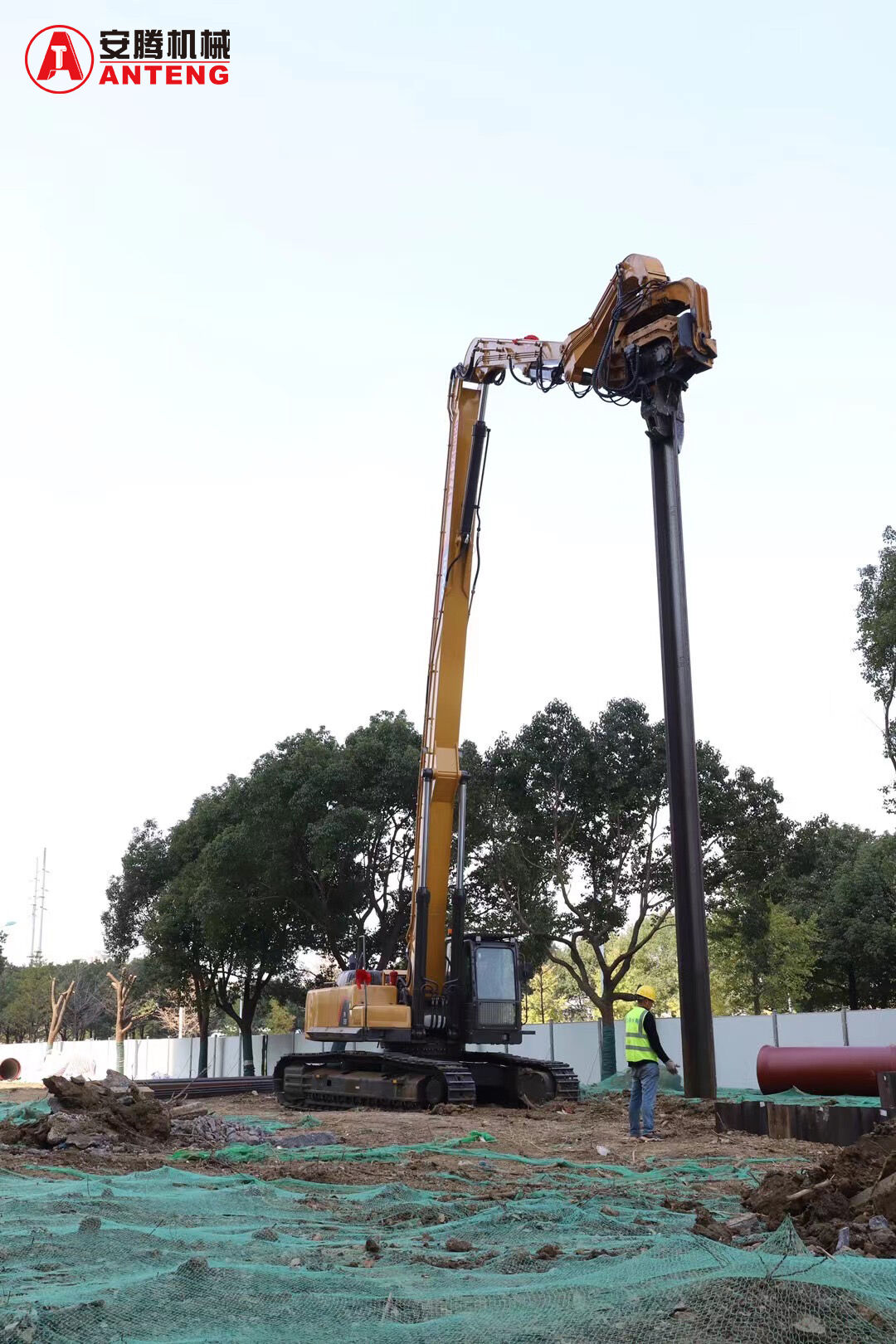
Selecting the right excavator size for an excavator vibro hammer is a critical decision that directly impacts project efficiency, equipment performance, and operational costs. The compatibility between your excavator's weight capacity and the vibro hammer attachment determines whether you can achieve optimal pile driving performance without compromising machine stability or causing premature wear. Understanding this relationship helps contractors make informed equipment choices that maximize productivity while maintaining safety standards.
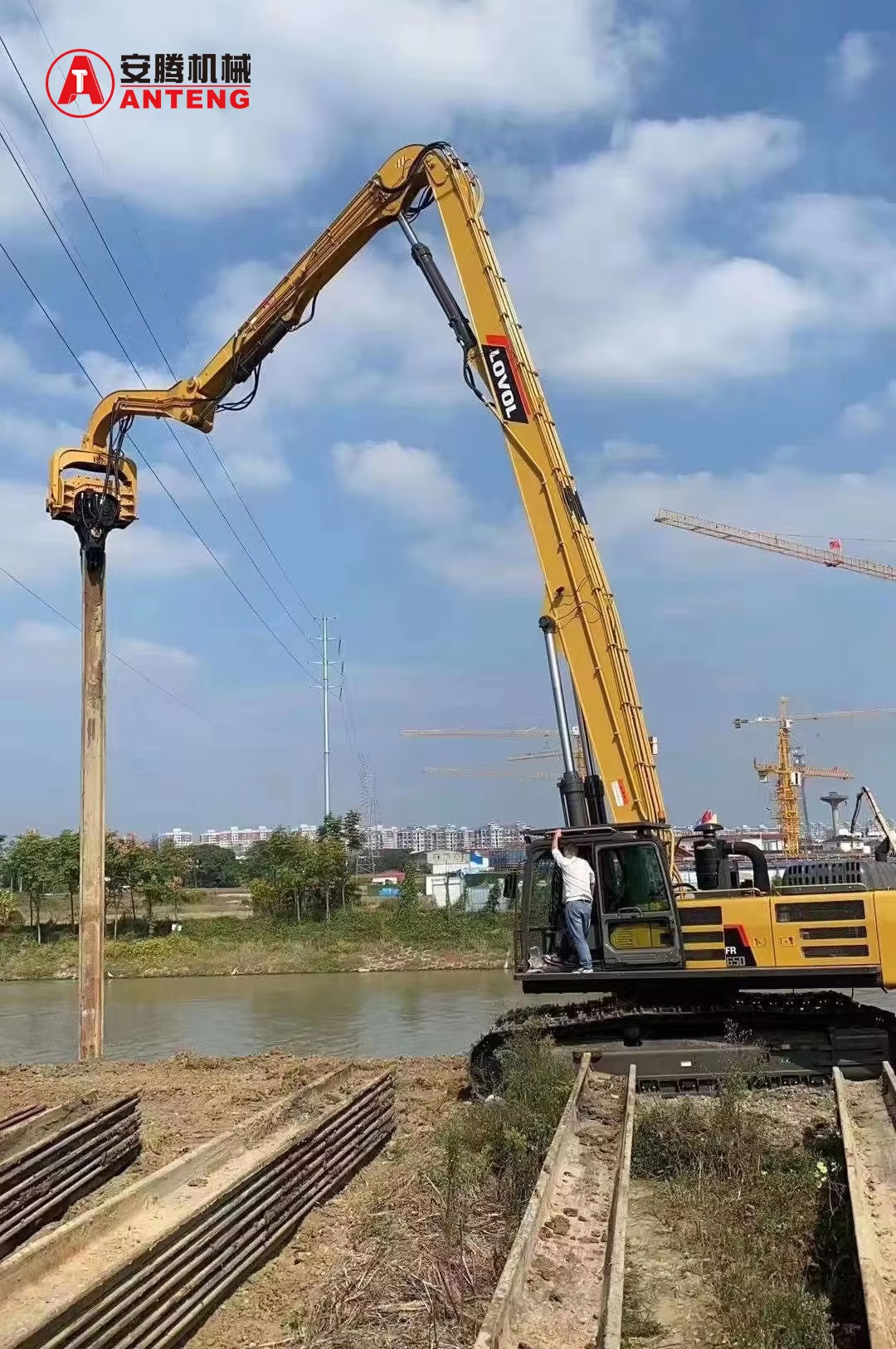
The excavator vibro hammer requires precise weight matching to deliver consistent vibratory energy transfer during pile installation operations. Too light an excavator lacks the necessary counterweight to handle the dynamic forces generated by the vibro hammer, while an oversized machine may exceed the attachment's design limits. This sizing relationship affects everything from penetration rates to fuel consumption, making proper equipment pairing essential for successful foundation work.
Weight Class Considerations for Excavator Vibro Hammer Systems
Small Excavator Compatibility Range
Small excavators in the 8-15 ton range can effectively operate lightweight excavator vibro hammer units designed for residential and light commercial applications. These compact combinations excel in urban environments where space constraints limit larger equipment access. The vibro hammer attachments for this weight class typically generate 300-600 vibrations per minute with eccentric moments ranging from 20-40 kNm.
The hydraulic flow requirements for small excavator vibro hammer systems generally fall between 80-150 liters per minute at operating pressures of 200-250 bar. This ensures adequate power delivery while remaining within the base machine's hydraulic capacity. Operators must verify that the excavator's auxiliary hydraulic circuit can sustain these flow rates during continuous operation without overheating.
Small excavator vibro hammer combinations work best with sheet piles up to 12 meters in length and soldier piles with diameters not exceeding 300mm. The limited counterweight of smaller excavators restricts their ability to handle larger pile sections, but they offer superior maneuverability in confined job sites where larger equipment cannot operate effectively.
Mid-Range Excavator Performance
Mid-range excavators weighing 15-25 tons represent the sweet spot for many excavator vibro hammer applications in commercial construction and infrastructure projects. These machines provide sufficient stability to handle higher amplitude vibrations while maintaining reasonable fuel consumption and operational costs. The vibro hammer units for this class typically produce eccentric moments between 40-80 kNm with frequency ranges of 400-800 vibrations per minute.
The hydraulic demands of mid-range excavator vibro hammer systems require flow rates between 150-250 liters per minute at pressures up to 300 bar. This increased hydraulic capacity enables more aggressive pile driving cycles and faster penetration rates in challenging soil conditions. The excavator's undercarriage design becomes crucial at this weight class to distribute the dynamic loads effectively.
Mid-range excavators can handle sheet piles up to 18 meters in length and concrete soldier piles with diameters reaching 500mm. The improved stability allows for more precise pile placement and better control during extraction operations. These combinations prove particularly effective in marine construction, where wave action requires additional machine stability during excavator vibro hammer operations.
Heavy Excavator Applications
Heavy excavators exceeding 25 tons can accommodate the most powerful excavator vibro hammer attachments available for demanding foundation projects. These combinations generate eccentric moments above 80 kNm with frequencies that can exceed 1000 vibrations per minute when soil conditions require maximum energy transfer. The substantial counterweight of heavy excavators enables operation with larger pile sections and in difficult ground conditions.
The hydraulic requirements for heavy excavator vibro hammer systems often exceed 250 liters per minute at pressures reaching 350 bar. Some applications may require dual hydraulic circuits to maintain adequate cooling and prevent system overheating during extended operation cycles. The excavator's cooling system capacity becomes a limiting factor in continuous operation scenarios.
Heavy excavator vibro hammer combinations can drive sheet piles exceeding 20 meters in length and handle concrete piles with diameters up to 800mm. The increased machine weight provides superior stability during high-amplitude operations but requires careful consideration of ground bearing capacity and access route planning for transportation to job sites.
Hydraulic System Requirements and Compatibility
Flow Rate Specifications
The hydraulic flow rate requirements for excavator vibro hammer operations depend on both the attachment size and the desired penetration rate. Standard vibro hammer units require continuous hydraulic flow to maintain consistent frequency during pile driving operations. Inadequate flow rates result in frequency variations that reduce penetration efficiency and may cause pile damage during installation.
Most excavator vibro hammer systems operate optimally when the hydraulic flow rate provides at least 120% of the attachment's minimum requirement. This reserve capacity accounts for system losses, temperature variations, and the increased flow demands during challenging soil conditions. Excavators with variable displacement pumps offer better control over flow delivery and energy efficiency.
The excavator's hydraulic reservoir capacity must accommodate the thermal loads generated during extended vibro hammer operation. Systems operating near maximum flow capacity generate significant heat that requires adequate cooling capacity to maintain hydraulic fluid properties and prevent component damage from overheating.
Pressure System Considerations
Operating pressure requirements for excavator vibro hammer systems vary with attachment size and soil resistance conditions. Higher operating pressures enable the vibro hammer to maintain frequency under load while providing the hydraulic force necessary for pile advancement in dense soils. The excavator's relief valve settings must accommodate these pressure requirements without compromising system safety.
Pressure spikes during excavator vibro hammer operation can exceed steady-state requirements by 50-100% when encountering obstructions or transitioning between soil layers. The excavator's hydraulic system must include adequate accumulator capacity and pressure relief protection to handle these dynamic loading conditions without damage to system components.
The excavator's hydraulic filtration system requires upgrading for excavator vibro hammer applications due to the increased contamination potential from continuous high-pressure operation. Enhanced filtration prevents premature wear of the vibro hammer's precision hydraulic components while extending service intervals and reducing maintenance costs.
Cooling System Requirements
Thermal management becomes critical in excavator vibro hammer applications due to the continuous high-power hydraulic operation required for pile driving. The excavator's standard cooling system may require supplementation with auxiliary coolers or upgraded heat exchangers to maintain optimal hydraulic fluid temperatures during extended operation cycles.
The cooling system design must account for the ambient temperature conditions and duty cycle expectations for the excavator vibro hammer application. Hot climate operations or continuous production schedules may require oversized cooling capacity to prevent thermal derating that reduces pile driving productivity.
Hydraulic fluid selection impacts cooling requirements and system performance in excavator vibro hammer applications. Synthetic fluids with superior thermal properties may justify their higher cost through improved system efficiency and extended component life in demanding applications.
Pile Size and Type Compatibility Factors
Sheet Pile Installation Requirements
Sheet pile installation with excavator vibro hammer systems requires careful matching of pile dimensions to equipment capabilities. The pile length directly affects the dynamic loads transmitted to the excavator during driving operations, while pile width influences the lateral forces that must be managed through proper machine positioning and stability control.
Z-section sheet piles create different loading patterns compared to U-section designs when driven with excavator vibro hammer attachments. The interlocking geometry affects the force transmission characteristics and may require frequency adjustments to optimize penetration rates without damaging the pile interlock connections.
The excavator vibro hammer must provide sufficient eccentric moment to overcome the soil resistance while maintaining the frequency range that promotes effective pile advancement. Under-powered combinations result in slow penetration rates and increased fuel consumption, while excessive power can damage pile sections or create installation tolerances that compromise wall integrity.
Soldier Pile Applications
Soldier pile installation places different demands on excavator vibro hammer systems compared to sheet pile applications. The concentrated load of individual concrete or steel piles requires higher amplitude vibrations to achieve effective soil displacement around the pile perimeter. The excavator's stability becomes more critical due to the eccentric loading created by the pile's weight and length.
Concrete soldier piles require careful frequency control during excavator vibro hammer installation to prevent structural damage to the pile material. The vibration frequency must remain within limits that promote soil displacement without creating resonance conditions that could crack or damage the concrete structure.
Steel soldier piles offer more flexibility in excavator vibro hammer frequency selection but require attention to pile straightness during installation. The combination of pile weight and vibration forces can cause deviation from vertical alignment if the excavator lacks sufficient stability or the operator fails to maintain proper control during the driving process.
Specialty Pile Considerations
Composite pile materials and specialized foundation elements may have unique requirements for excavator vibro hammer installation. These applications often require custom frequency settings or modified driving sequences to accommodate material properties while achieving the required installation depth and alignment tolerances.
Pre-cast concrete piles with embedded reinforcement require careful excavator vibro hammer frequency control to prevent damage to the internal steel structure. The vibration characteristics must promote soil displacement without creating harmonic resonance that could compromise the pile's structural integrity.
Temporary piling applications may allow more aggressive excavator vibro hammer settings since extraction requirements are typically less stringent than permanent foundation installations. However, the increased vibration levels must remain within the excavator's operational limits to prevent premature wear or component failure.
Soil Conditions and Performance Optimization
Clay and Cohesive Soil Challenges
Clay and cohesive soil conditions present unique challenges for excavator vibro hammer operations that affect equipment sizing decisions. Dense clay soils require higher amplitude vibrations to break the cohesive bonds and create the liquefaction necessary for pile advancement. The excavator must provide sufficient weight to maintain stability while the vibro hammer generates the energy needed to overcome soil resistance.
Soft clay conditions may require frequency adjustments to prevent excessive penetration rates that could damage piles or create alignment problems. The excavator vibro hammer system must offer precise frequency control to match the soil's response characteristics while maintaining consistent advancement rates throughout the pile length.
Varved clay deposits with alternating hard and soft layers challenge excavator vibro hammer systems with rapidly changing penetration resistance. The equipment combination must provide sufficient power reserve to maintain frequency during transition zones while offering the control necessary to prevent sudden acceleration in softer materials.
Sandy Soil Advantages
Sandy soils provide ideal conditions for excavator vibro hammer operations due to their excellent response to vibratory driving techniques. The granular nature of sand allows effective liquefaction at lower energy levels, reducing the power requirements and enabling smaller excavator combinations to achieve good productivity rates.
Dense sand conditions may require higher frequency settings to achieve effective grain displacement around the pile perimeter. The excavator vibro hammer combination must provide sufficient energy to overcome the increased bearing resistance while maintaining the frequency range that promotes effective sand particle movement.
Saturated sand conditions enhance the effectiveness of excavator vibro hammer installations by promoting rapid liquefaction and reducing soil resistance. The reduced power requirements allow smaller equipment combinations to achieve productivity levels comparable to larger systems in less favorable soil conditions.
Mixed Soil and Rock Conditions
Mixed soil conditions with varying density and composition require excavator vibro hammer systems with broad frequency ranges and high power reserves. The equipment must adapt to changing soil properties throughout the pile driving process while maintaining consistent penetration rates and pile alignment.
Boulder and debris conditions may require excavator vibro hammer systems with impact capabilities or supplemental drilling equipment to clear obstructions. The excavator size must accommodate additional attachments while providing the stability necessary for safe operation during obstruction removal procedures.
Weathered rock conditions challenge excavator vibro hammer systems with high penetration resistance and potential for equipment damage. The combination must provide sufficient power to advance through resistant materials while offering the control necessary to prevent overloading that could damage the vibro hammer or excavator components.
FAQ
What is the minimum excavator weight required for vibro hammer operations?
The minimum excavator weight for vibro hammer operations typically starts around 8 tons for small residential applications, but most commercial excavator vibro hammer systems require machines weighing at least 15 tons to provide adequate stability and hydraulic capacity. The excavator must weigh approximately 3-4 times the vibro hammer attachment weight to ensure proper counterweight balance during operation.
Can I use an excavator vibro hammer with different pile types on the same project?
Yes, most excavator vibro hammer systems can handle multiple pile types with appropriate clamp adjustments and frequency settings. However, the excavator size must accommodate the largest pile dimensions and highest power requirements among all pile types used on the project. Switching between pile types may require clamp changes and frequency optimization for each application.
How does soil condition affect excavator size selection for vibro hammer work?
Difficult soil conditions like dense clay or mixed materials require larger excavators to provide the stability and power necessary for effective excavator vibro hammer operation. Challenging conditions may require excavators 25-50% larger than minimum recommendations to maintain productivity and prevent equipment overloading. Sandy soils allow smaller excavator combinations due to reduced penetration resistance.
What happens if I use an undersized excavator with a vibro hammer?
Using an undersized excavator with a vibro hammer results in poor stability, reduced penetration rates, and potential safety hazards. The excavator may experience excessive movement during operation, leading to poor pile alignment and increased fuel consumption. Insufficient hydraulic capacity will cause frequency variations that reduce driving efficiency and may damage the excavator vibro hammer attachment.
Table of Contents
- Weight Class Considerations for Excavator Vibro Hammer Systems
- Hydraulic System Requirements and Compatibility
- Pile Size and Type Compatibility Factors
- Soil Conditions and Performance Optimization
-
FAQ
- What is the minimum excavator weight required for vibro hammer operations?
- Can I use an excavator vibro hammer with different pile types on the same project?
- How does soil condition affect excavator size selection for vibro hammer work?
- What happens if I use an undersized excavator with a vibro hammer?