
 EN
EN

Selecting a steel sheet pile vibratory hammer should not be based only on price or excitation force. For short piles, municipal works, bridge-under construction and narrow-space projects, excavator-mounted vibratory hammers or side-clamp excavator-mounted hammers should be considered first. For long piles, deep foundation pits, ports and terminals, cofferdams and waterside projects, lifting-type hydraulic vibratory hammers with matching power packs are more suitable. Clamp configuration is equally critical, as mismatched clamps directly affect pile sinking efficiency, extraction capability and construction safety.
Steel sheet piles are widely used in foundation pit support, river regulation, ports and terminals, bridge cofferdams, underground pipelines, urban renewal and bank protection works. Different working conditions require different equipment. Urban roads, pipeline renovation and bridge-under construction require flexible transfer, small footprint and easy operation. Ports, cofferdams and deep foundation pits place greater emphasis on eccentric moment, excitation force, clamping force, power stability and continuous operating capability.
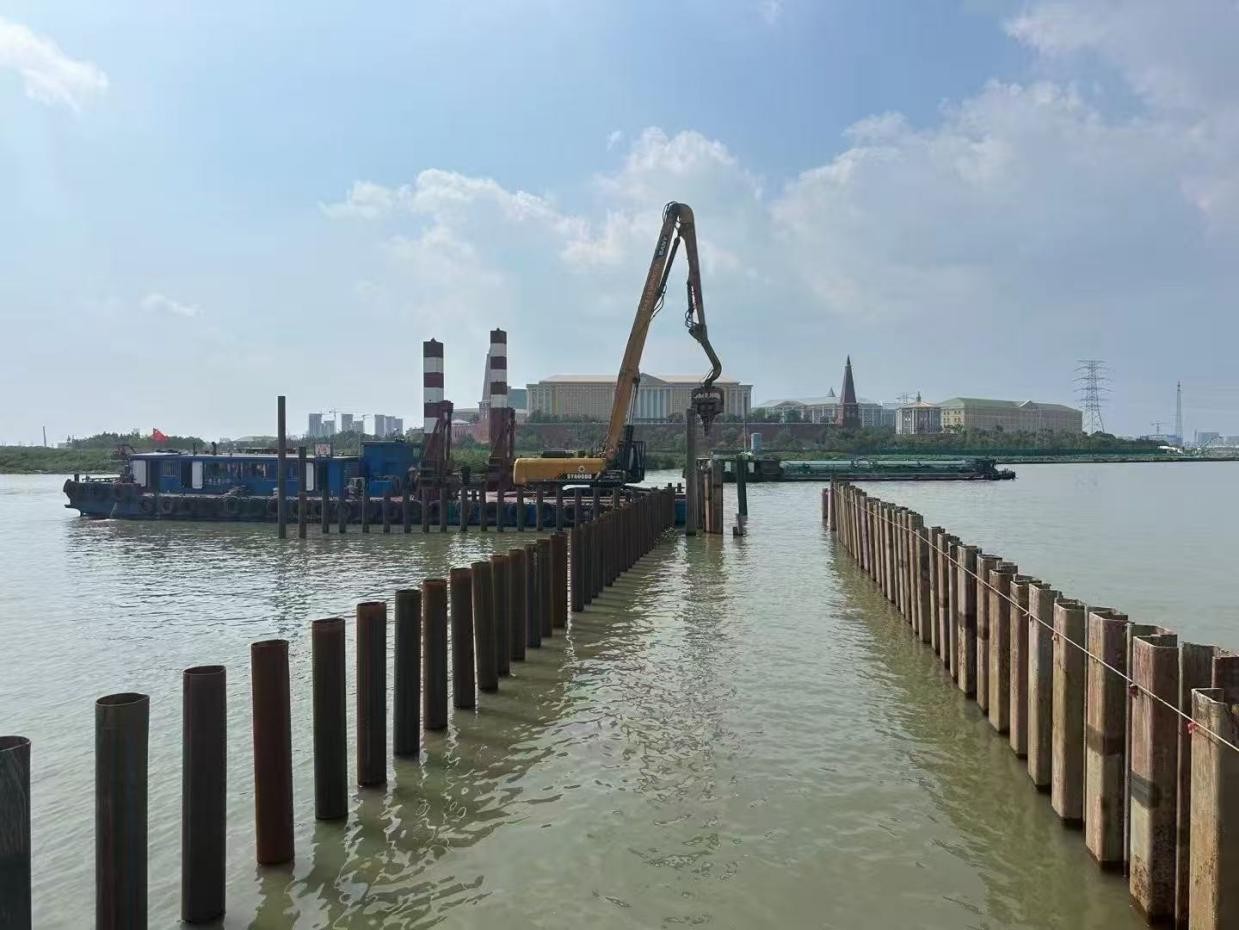
Pile length is also a key selection factor. Steel sheet piles of 6-9 m are mostly used in shallow foundation pits, municipal support and small river projects, where medium or small excavator-mounted hammers or side-clamp hammers can be selected. For 9-18 m steel sheet piles, excavator tonnage, hydraulic system and clamp engagement capability must be considered. Long piles above 18 m are usually used in deep foundation pits, ports and cofferdam projects, where larger hydraulic vibratory hammers and power-pack configuration should be evaluated. Soil conditions must also be considered. Soft soil and mucky soil are relatively easy to construct, while dense sand, hard plastic clay, backfill or stone-bearing layers require higher excitation force.
During selection, five parameters deserve special attention: excitation force, eccentric moment, frequency, clamping force and power system. Excitation force determines the ability to overcome soil resistance. Eccentric moment affects amplitude and is a factor in judging whether pile driving is possible. High frequency is more suitable for steel sheet piles and urban construction. Clamping force determines whether vibration energy can be effectively transmitted to the pile body. The power pack or excavator hydraulic system affects continuous construction efficiency.
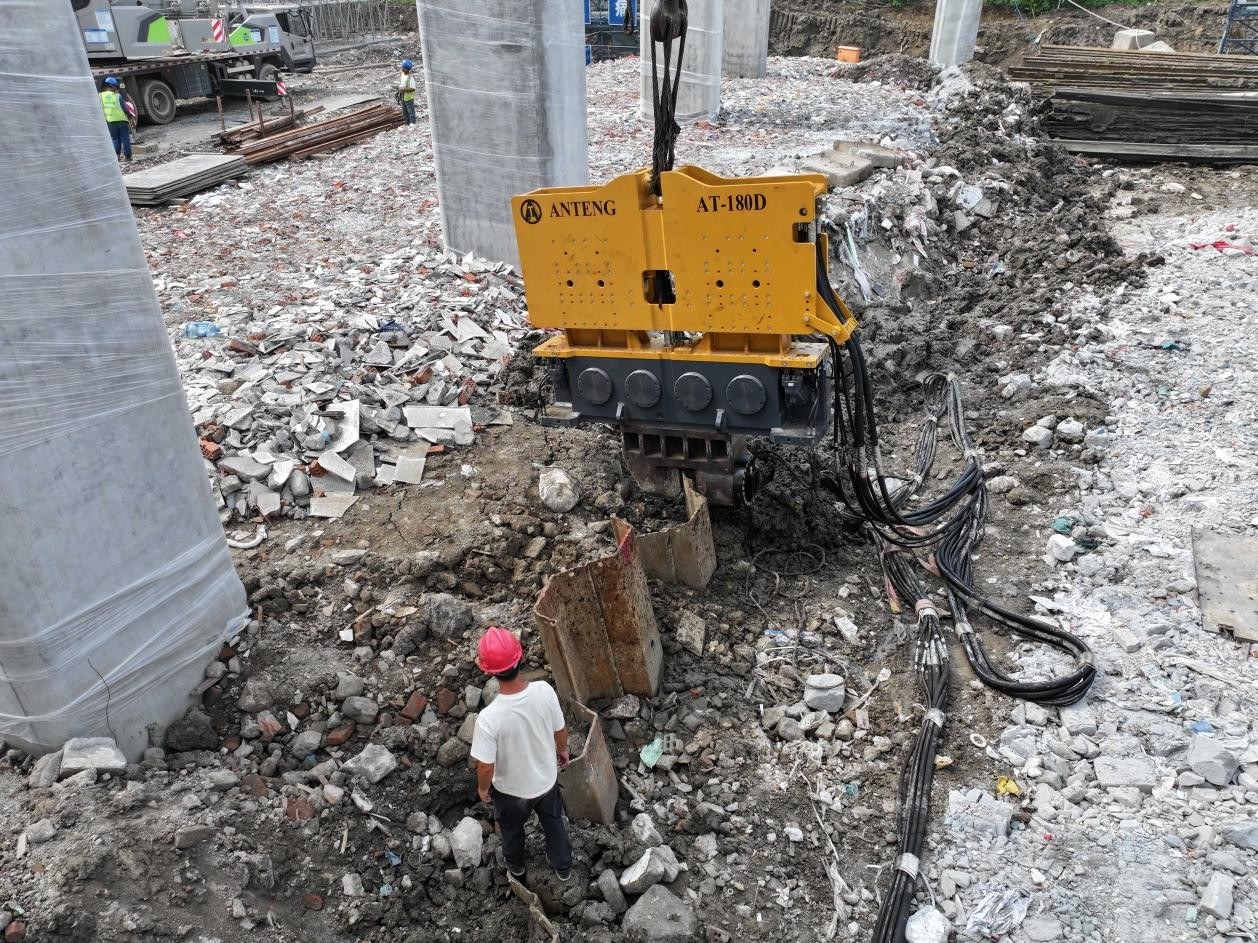
Clamp configuration is often more important than customers expect. Standard clamps can be used for ordinary steel sheet piles. For wide sheet piles, special interlock sheet piles or overseas project pile types, customers are advised to provide pile drawings, interlock dimensions, pile width and thickness in advance to confirm whether custom clamps are required. Inaccurate clamp engagement, worn teeth or insufficient clamping force can all lead to efficiency losses and even safety risks.
Jiangsu Anteng Machinery Co., Ltd. can provide excavator-mounted hammers, side-clamp excavator-mounted hammers, hydraulic vibratory hammers, resonance-free hydraulic vibratory hammers, power packs and customized clamp solutions according to steel sheet pile length, soil layers, construction space and host-machine configuration. The core of steel sheet pile vibratory hammer selection is not choosing the largest equipment, but choosing the complete construction solution best suited to onsite working conditions.