
 EN
EN

The core principle of a vibratory hammer is to generate vibration through the high-speed rotation of eccentric blocks, transmit vibration energy to the pile body, and then use the pile body to disturb the surrounding soil layers, reducing soil resistance around the pile. Once friction between the foundation soil and pile body is weakened, the pile can be driven into or extracted from the ground more efficiently under the combined action of the vibratory hammer's self-weight, equipment excitation force and auxiliary force from an excavator or crane.
A vibratory hammer, also called a hydraulic vibratory hammer or vibratory piling hammer, is commonly used in pile foundation construction. It can drive and extract steel sheet piles, steel pipe piles, timber piles, H-beams and other pile types. It is widely used in bridges, ports, roads, airports, rivers, water conservancy, building foundations, photovoltaic foundations, wind power foundations and temporary support works.
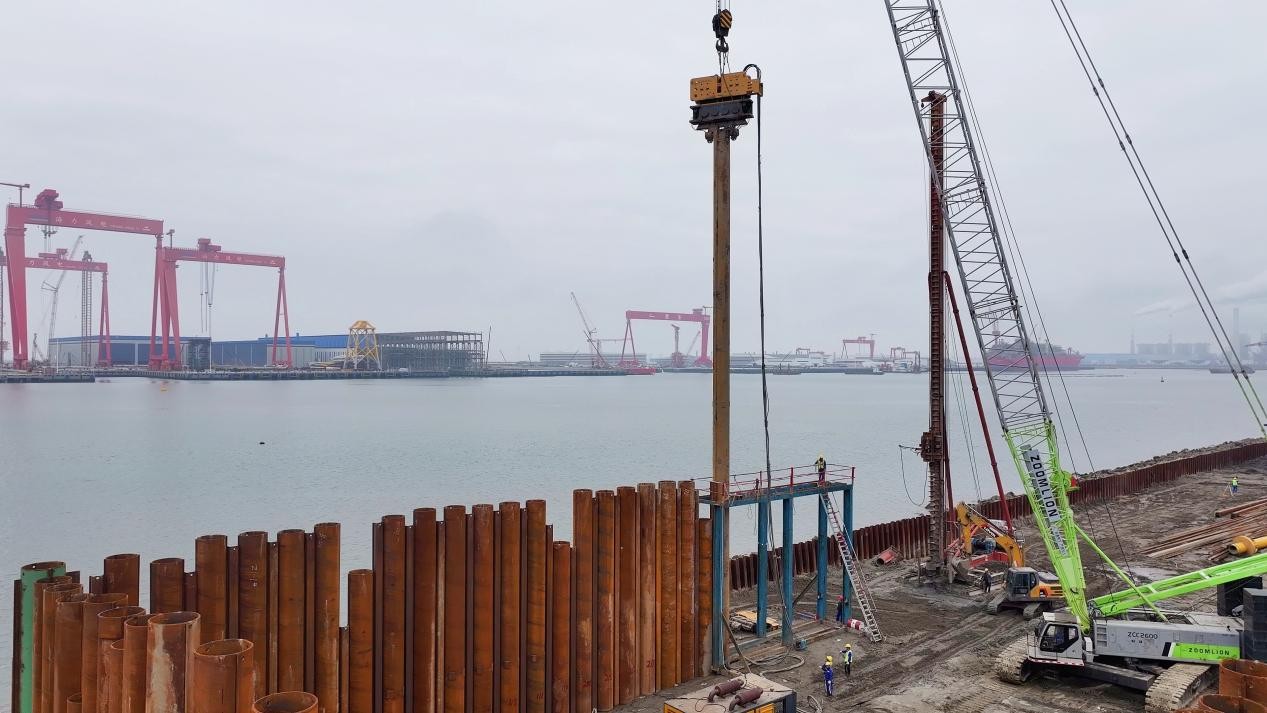
1. Why Can a Vibratory Hammer Drive Piles?
Inside a vibratory hammer, there is one pair or multiple sets of eccentric blocks. After a hydraulic motor drives these eccentric blocks to rotate at high speed, periodic excitation force is generated. The vibratory hammer clamps the pile through its clamp and transmits high-frequency vibration to the pile.
After the pile vibrates, the surrounding soil structure changes and friction resistance between pile and soil decreases. Simply put, the soil layer that originally held the pile becomes easier for the pile body to pass through under high-frequency vibration. At this point, the pile enters the strata under the action of its self-weight, the weight of the vibratory hammer and equipment downforce.
The same principle applies to pile extraction. The vibratory hammer first reduces pile-soil friction through vibration, then works with the upward pulling force of an excavator or crane to extract the pile from the soil.
2. Why Are Hydraulic Vibratory Hammers Suitable for Modern Construction?
Compared with traditional impact piling equipment, hydraulic vibratory hammers offer faster construction speed, relatively lower noise and the ability to both drive and extract piles. In urban construction, ports and terminals, bridge cofferdams and temporary support projects, their efficiency and adaptability are especially strong. Lifting-type hydraulic vibratory hammers usually require matching power packs and cranes, and are suitable for long piles, large-diameter piles, ports, cofferdams and deep foundation works.
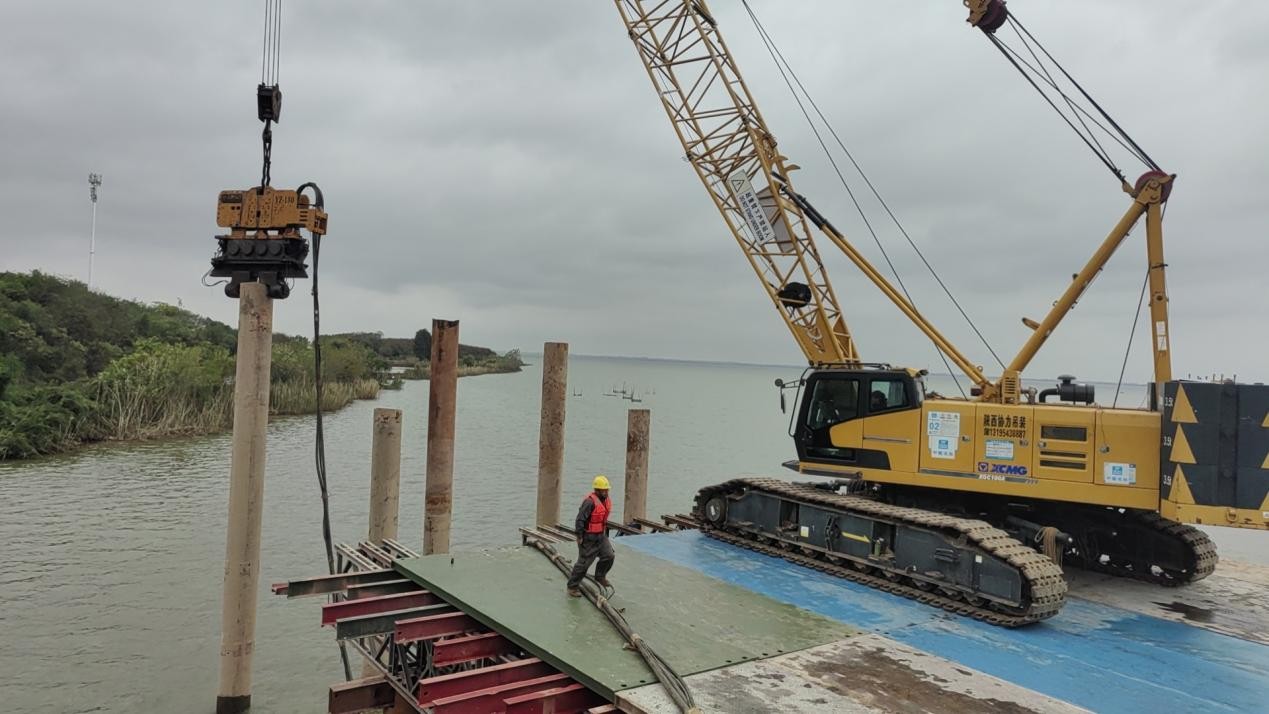
3. Why Do Soil Layers Affect Vibratory Hammer Efficiency?
Vibratory hammer efficiency is closely related to soil conditions. Soft soil, mucky soil and saturated sand are generally easier for pile sinking. Dense sand, hard plastic clay, backfill and stone-bearing layers have higher resistance, requiring higher excitation force, stronger clamping force and larger eccentric moment. When necessary, pre-drilling, impact hammers or other auxiliary methods may be needed. Therefore, the same vibratory hammer may perform very differently on different jobsites. During professional selection, customers should provide the manufacturer with information such as pile type, pile length, penetration depth, soil conditions, construction platform and whether pile extraction is required.
4. How Does Anteng Provide Vibratory Piling Solutions?
Jiangsu Anteng Machinery Co., Ltd. can provide hydraulic vibratory hammers, excavator-mounted hammers, side-clamp excavator-mounted hammers, resonance-free hydraulic vibratory hammers and hydraulic impact hammers according to pile type, pile length, soil layer, construction space and host-machine configuration. These product series can serve steel sheet piles, steel pipe piles, H-beams, casings, PVC piles and many other pile types.
For contractors, rental companies and overseas procurement customers, understanding how vibratory hammers work helps them select equipment more accurately, improve construction efficiency and reduce project risk.