
 EN
EN

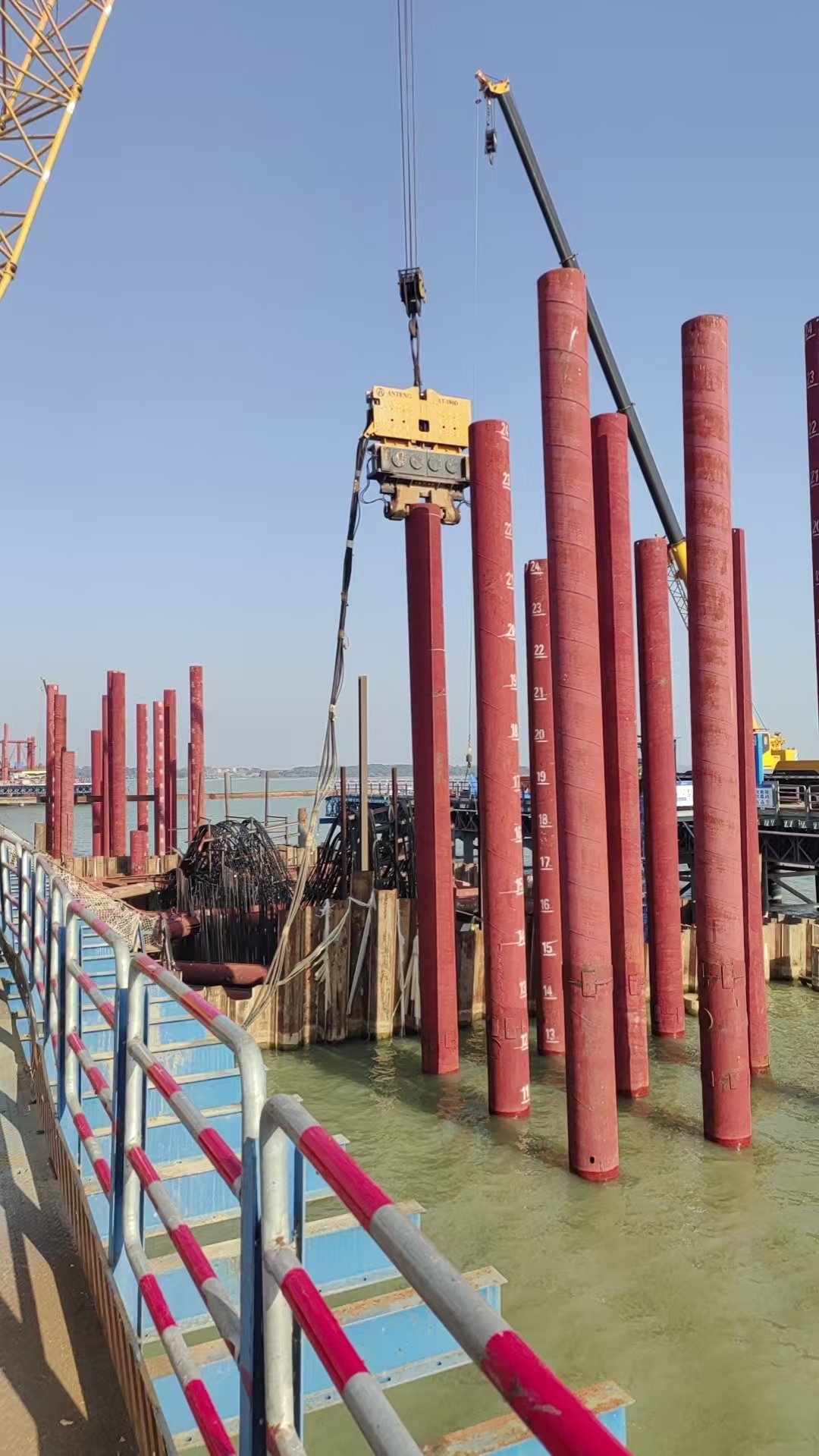
Urban construction projects face unique challenges when it comes to piling operations, particularly in densely populated areas where noise, vibration, and space constraints create significant operational limitations. A side grip vibro hammer emerges as a specialized solution designed to address these specific urban piling requirements through its innovative gripping mechanism and controlled vibration technology. Understanding what makes this equipment particularly suitable for urban environments requires examining its design features, operational characteristics, and the specific advantages it offers over traditional piling methods.
The suitability of a side grip vibro hammer for urban piling stems from its ability to minimize environmental impact while maintaining effective pile installation and extraction capabilities. Urban construction sites typically operate under strict regulatory frameworks that limit allowable noise levels, working hours, and ground vibration transmission to adjacent structures. The side grip vibro hammer's design philosophy centers on addressing these constraints through reduced resonance technology, precise force application, and enhanced operational control that makes it an ideal choice for sensitive urban environments.
Noise and Vibration Control Mechanisms
Resonance-Free Operation Technology
The primary factor that makes a side grip vibro hammer suitable for urban piling is its resonance-free operation technology, which significantly reduces the transmission of harmful vibrations to surrounding structures. Traditional impact hammers generate high-amplitude shock waves that can damage nearby buildings, underground utilities, and sensitive infrastructure common in urban environments. The side grip vibro hammer utilizes controlled vibratory motion that operates at frequencies specifically designed to minimize resonance with typical building structures.
This resonance-free technology works by maintaining vibratory frequencies that avoid the natural resonant frequencies of surrounding structures, typically ranging between 1-10 Hz for most buildings. The side grip vibro hammer operates at carefully calibrated frequencies, usually between 20-40 Hz, which creates an effective isolation zone that prevents structural damage while maintaining optimal pile penetration efficiency. This frequency control mechanism is essential for urban projects where historical buildings, residential structures, and commercial facilities must be protected during construction activities.
The vibration control system incorporates advanced dampening mechanisms that further reduce energy transmission beyond the immediate work area. These dampening systems utilize hydraulic isolation chambers and elastic mounting systems within the side grip vibro hammer assembly to absorb and dissipate excess vibratory energy before it can propagate through the soil matrix to adjacent structures.
Acoustic Emission Management
Noise control represents another critical factor in urban piling suitability, where local ordinances often restrict construction noise to specific decibel levels during designated hours. The side grip vibro hammer produces significantly lower acoustic emissions compared to diesel-powered impact hammers, typically operating at 75-85 dB at a distance of 7 meters, compared to 90-110 dB for conventional impact systems. This noise reduction capability allows for extended working hours and reduces community complaints that often plague urban construction projects.
The reduced noise generation stems from the side grip vibro hammer's hydraulic drive system, which eliminates the explosive combustion cycles associated with diesel hammers. The hydraulic system operates through smooth, continuous motion that generates consistent low-frequency vibrations without the sharp acoustic spikes characteristic of impact-based pile driving. Additionally, the enclosed design of modern side grip vibro hammer units incorporates sound dampening materials and aerodynamic housing that further reduces noise propagation.
Advanced noise control features include variable frequency operation that allows operators to adjust vibratory characteristics based on real-time acoustic monitoring. This capability enables compliance with time-sensitive noise restrictions while maintaining productivity levels necessary for project completion within urban construction schedules.
Precision Control and Operational Flexibility
Lateral Gripping Mechanism Advantages
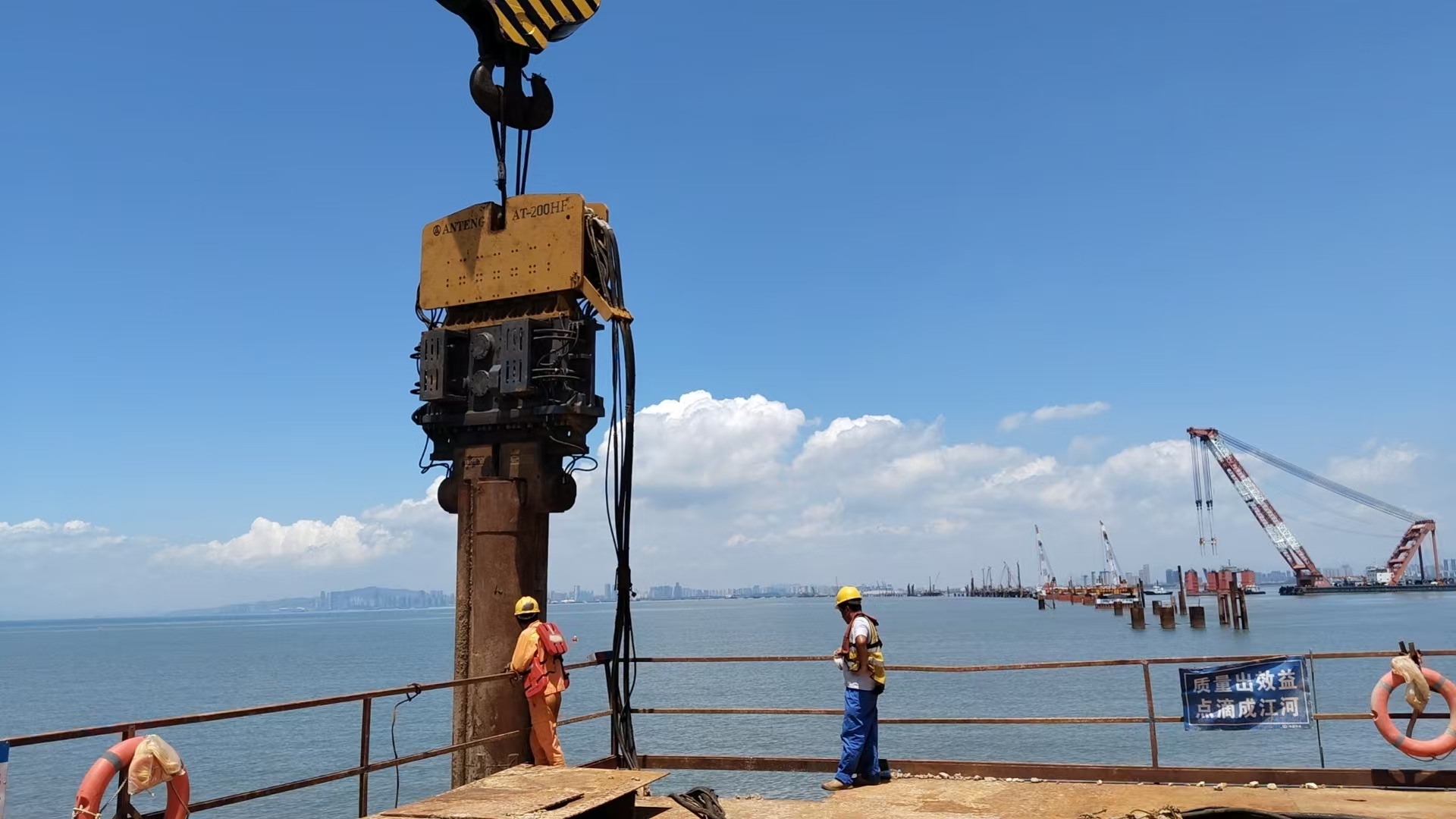
The side grip mechanism itself provides fundamental advantages for urban piling applications by offering superior control over pile positioning and insertion forces. Unlike top-mounted hammers that apply vertical force through pile heads, the side grip vibro hammer clamps directly onto the pile shaft, providing distributed force application that reduces pile head damage and allows for more precise positioning in confined urban spaces. This gripping arrangement enables operators to maintain exact pile alignment even in restricted access areas common to urban construction sites.
The lateral gripping system allows for enhanced maneuverability around existing infrastructure, underground utilities, and adjacent structures that characterize urban construction environments. The side grip vibro hammer can operate in spaces where traditional top-mounted systems would be impossible to position, making it particularly valuable for infill development, foundation reinforcement projects, and construction adjacent to existing buildings where overhead clearance is limited.
Furthermore, the side grip configuration enables continuous monitoring of pile performance during installation, as operators can observe pile penetration rates, soil resistance changes, and potential obstructions in real-time. This monitoring capability is crucial in urban environments where unexpected subsurface conditions, including buried utilities, old foundation elements, or varying soil conditions, are frequently encountered during piling operations.
Variable Frequency Control Systems
Modern side grip vibro hammer systems incorporate sophisticated variable frequency control technology that allows operators to optimize vibratory parameters for specific soil conditions and urban constraints. This control capability enables real-time adjustment of vibratory frequency, amplitude, and force application to match changing subsurface conditions while maintaining compliance with environmental restrictions. The ability to fine-tune operational parameters makes the side grip vibro hammer particularly effective in the heterogeneous soil conditions typically found in urban areas.
Variable frequency control also enables the side grip vibro hammer to adapt to different pile materials and installation requirements without changing equipment configurations. Steel piles, precast concrete elements, and composite materials each respond differently to vibratory installation, and the frequency control system allows optimization for each material type. This versatility reduces equipment mobilization costs and project complexity in urban environments where multiple pile types may be required for different structural elements.
The control systems typically include programmable logic controllers that can store optimal frequency profiles for different soil conditions, pile types, and site-specific requirements. These stored profiles enable consistent performance across multiple urban project phases while providing documentation for regulatory compliance and quality assurance requirements common in urban construction projects.
Space Efficiency and Access Capabilities
Compact Equipment Footprint
Urban construction sites often operate under severe space constraints that limit equipment selection and placement options. The side grip vibro hammer typically requires a smaller operational footprint compared to traditional pile driving systems, as it eliminates the need for extensive overhead clearance and can operate in tighter quarters. The compact design allows for installation in areas where conventional impact hammers would require significant site preparation or would be completely inaccessible.
The reduced footprint extends beyond just the hammer unit itself to include supporting equipment such as power units, crane requirements, and material staging areas. Side grip vibro hammer systems can often operate with smaller capacity cranes due to their lighter weight and balanced design, which reduces the overall construction equipment footprint on crowded urban sites. This equipment efficiency translates to lower mobilization costs and reduced site disruption for urban projects.
Additionally, the compact nature of side grip vibro hammer operations allows for simultaneous construction activities in adjacent areas, improving overall project efficiency. While one crew operates the side grip vibro hammer for piling work, other trades can continue with related construction tasks in close proximity, maximizing the utilization of limited urban construction space.
Multi-Directional Installation Capability
The side grip vibro hammer's design enables pile installation at various angles and orientations, which proves essential for urban foundation work that often requires non-vertical pile installation. Battered piles, inclined support systems, and angled foundation elements are common in urban construction where space constraints and existing infrastructure influence foundation design. The side grip mechanism maintains secure pile control regardless of installation angle, enabling complex foundation configurations that would be difficult or impossible with traditional vertical pile driving systems.
This multi-directional capability also extends to pile extraction operations, where the side grip vibro hammer can safely remove existing piles from urban sites during renovation or demolition projects. The controlled extraction process minimizes soil disturbance and reduces the risk of damage to adjacent structures, making it valuable for urban redevelopment projects where existing foundation elements must be removed before new construction can proceed.
The ability to work in confined spaces with angled installation also enables the side grip vibro hammer to install foundation elements for underpinning operations, where existing building foundations must be reinforced or extended without disrupting building occupancy. This capability makes the equipment particularly suitable for historic building preservation projects and commercial building renovations common in urban environments.
Environmental Impact Minimization
Soil Disturbance Reduction
Urban construction projects must carefully manage soil disturbance to protect underground utilities, existing foundations, and environmental quality. The side grip vibro hammer creates minimal soil displacement during pile installation compared to displacement pile systems or excavation-based foundation methods. The vibratory action temporarily fluidizes soil around the pile, allowing penetration without significant permanent displacement that could affect adjacent structures or utilities.
This reduced soil disturbance characteristic makes the side grip vibro hammer particularly suitable for installation in sensitive urban soils, including areas with potential contamination, where minimal soil mixing and displacement are essential for environmental compliance. The controlled installation process reduces the risk of mobilizing contaminated materials and minimizes the volume of soil that requires environmental testing or special handling during urban construction projects.
The minimal soil disturbance also preserves the integrity of adjacent foundations and underground infrastructure, reducing the risk of settlement or damage claims that can be costly and time-consuming in urban environments. The side grip vibro hammer's controlled energy application ensures that soil modification remains localized to the immediate pile installation zone without creating widespread ground movement that characterizes more aggressive pile installation methods.
Waste Minimization and Material Efficiency
Urban construction projects operate under increasing pressure to minimize waste generation and maximize material efficiency due to limited disposal options and environmental regulations. The side grip vibro hammer contributes to these sustainability goals by enabling precise pile installation that minimizes material waste and reduces the need for extensive site preparation. The accurate positioning capability reduces pile cutting waste and eliminates the need for temporary pile extensions often required with less precise installation methods.
The equipment's ability to install piles to exact design elevations without over-driving or under-penetration reduces both material waste and potential rework costs. This precision becomes particularly valuable in urban environments where material delivery and waste removal logistics are complex and expensive. The side grip vibro hammer's consistent performance reduces the variability that can lead to material overages and project delays common in urban construction.
Furthermore, the side grip vibro hammer's capability for pile extraction and reuse supports circular construction practices increasingly demanded in urban sustainability programs. Piles installed with vibratory methods can often be extracted and reused in other project phases or locations, reducing overall material consumption and supporting green building certification requirements that are becoming standard for urban development projects.
FAQ
How does a side grip vibro hammer reduce noise compared to traditional pile driving methods?
A side grip vibro hammer operates using continuous hydraulic-driven vibration rather than repetitive impact blows, which significantly reduces peak noise levels. The equipment typically generates 75-85 dB at 7 meters distance compared to 90-110 dB for diesel impact hammers. The enclosed hydraulic system eliminates combustion noise while the controlled vibratory motion avoids the sharp acoustic spikes associated with impact driving, making it compliant with strict urban noise ordinances.
What makes the side grip mechanism better suited for confined urban spaces than top-mounted hammers?
The side grip vibro hammer clamps directly onto the pile shaft rather than requiring overhead clearance for top-mounted operation, enabling work in areas with limited vertical space such as under bridges, near existing structures, or in basement construction. This configuration also allows for angled pile installation and provides better maneuverability around existing infrastructure, underground utilities, and adjacent buildings that characterize dense urban construction environments.
Can a side grip vibro hammer install piles in all urban soil conditions?
A side grip vibro hammer is most effective in granular soils, loose to medium dense sands, and gravels commonly found in urban areas. The variable frequency control allows optimization for different soil conditions, though performance may be limited in very hard clays, rock, or heavily cemented soils. The equipment works well in the mixed soil conditions typical of urban sites, and the controlled vibration helps navigate around buried obstructions often encountered in developed areas.
What are the key factors to consider when selecting a side grip vibro hammer for urban piling projects?
Key selection factors include vibration amplitude and frequency control capabilities to meet local noise and vibration limits, pile size compatibility with the gripping mechanism, power requirements that can be met by available urban utilities, and equipment size that fits site access constraints. Additionally, consider the availability of resonance-free technology for sensitive environments, variable frequency control for diverse soil conditions, and the contractor's experience with urban regulatory compliance requirements.
Table of Contents
- Noise and Vibration Control Mechanisms
- Precision Control and Operational Flexibility
- Space Efficiency and Access Capabilities
- Environmental Impact Minimization
-
FAQ
- How does a side grip vibro hammer reduce noise compared to traditional pile driving methods?
- What makes the side grip mechanism better suited for confined urban spaces than top-mounted hammers?
- Can a side grip vibro hammer install piles in all urban soil conditions?
- What are the key factors to consider when selecting a side grip vibro hammer for urban piling projects?