
 EN
EN

Conclusion: Vibratory hammer selection is not simply about model size. It requires consideration of three key factors: whether the excitation force can overcome pile-soil friction, whether the weight of the overall system can meet pile-sinking needs, and whether the working amplitude is sufficient to break the friction resistance between pile and soil. Only by combining these factors with pile type, pile length, geology, crane capacity and clamp configuration can contractors choose equipment that truly fits the site.
The core function of a vibratory hammer is to generate excitation force through high-speed rotation of eccentric blocks, disturbing the soil around the pile and reducing friction resistance between pile and soil, thereby completing pile sinking or extraction. Common selection logic in the industry includes: excitation force P0 should be greater than the dynamic side friction Tv between pile and soil; the system weight Q0 made up of the vibratory hammer, clamp and pile should overcome pile tip resistance Rv; and working amplitude A0 should meet the minimum amplitude required for pile sinking. In simple terms, the equipment must be able to push, press and vibrate effectively.
The first step is to consider pile type. Projects involving steel sheet piles, H-beams and photovoltaic piles with smaller sections and shallower penetration can use medium or small vibratory hammers or excavator-mounted vibratory hammers. Large-diameter steel pipe piles, terminal piles, bridge trestle piles and cofferdam piles require hydraulic vibratory hammers with higher excitation force, larger eccentric moment and stronger clamping force. For example, the Anteng AT-100 series has an excitation force of about 1,000-1,140 kN, suitable for regular steel sheet piles and pipe piles. The AT-180C has an excitation force of 1,810 kN and is suitable for medium-strength pile foundation work. The AT-230B has an excitation force of 2,760 kN and can be used for larger steel pipe piles and complex support scenarios. The AT-300, AT-400 and AT-500 reach 3,076 kN, 4,300 kN and 5,400 kN respectively, making them more suitable for heavy-duty conditions such as ports and terminals, deep-water cofferdams and large-diameter long steel pipe piles.
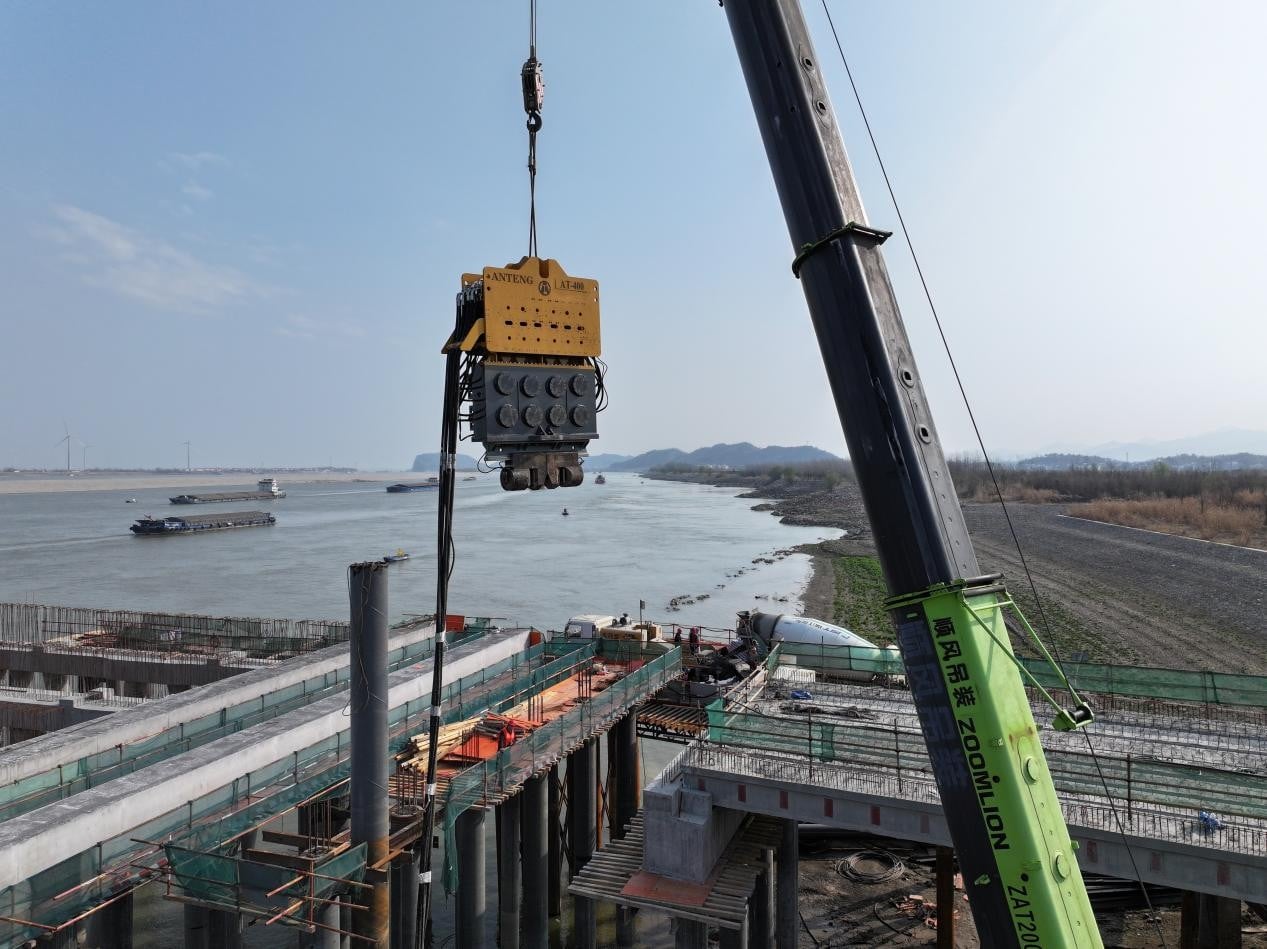
The second step is to consider geology. Sand, silt and soft clay are generally more suitable for vibratory pile sinking. Dense sand, hard clay and pebble layers significantly increase pile sinking resistance, requiring higher excitation force and, when necessary, pre-drilling or impact hammers. If the project is located in an urban center, along metro lines, near hospitals or schools, or close to old buildings, resonance-free hydraulic vibratory hammers should also be considered. Anteng resonance-free series equipment reduces resonance impact on surrounding buildings during startup and shutdown through adjustable eccentric moment and frequency control, making it more suitable for low-vibration and low-noise construction environments.
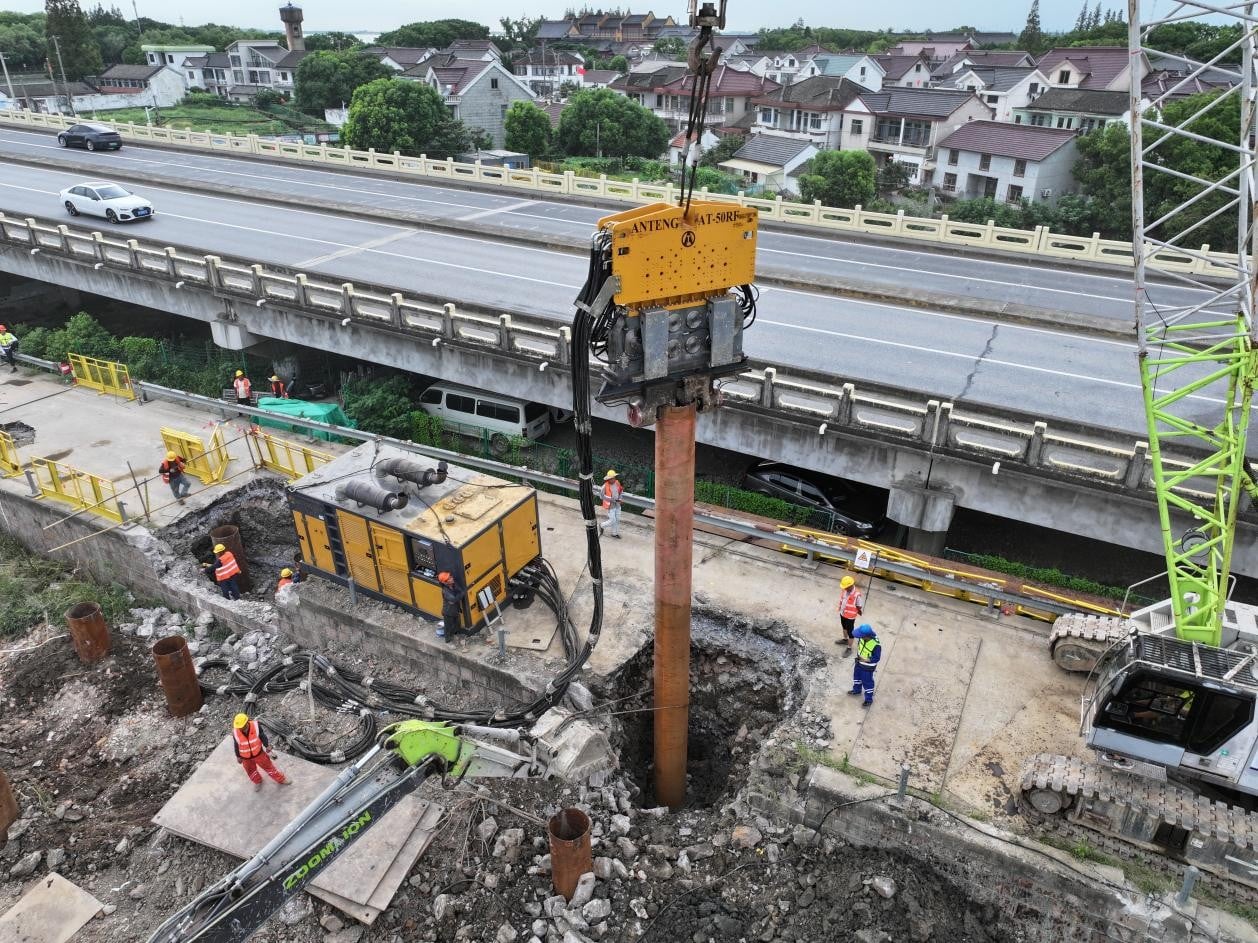
The third step is to consider clamps and power packs. Steel sheet piles usually use single clamps, while steel pipe piles generally use double clamps. Ultra-large-diameter steel pipe piles require customization according to pile diameter, and special pile types such as shaped piles, PVC piles and casings require custom clamps. The power pack must also match the flow and pressure requirements of the vibratory hammer. In Anteng's product portfolio, hydraulic vibratory hammers can be matched with 400P to 1600P power packs, with working pressure generally at 350 bar. During selection, it is not enough to look only at hammer body parameters; power pack output must also be confirmed.
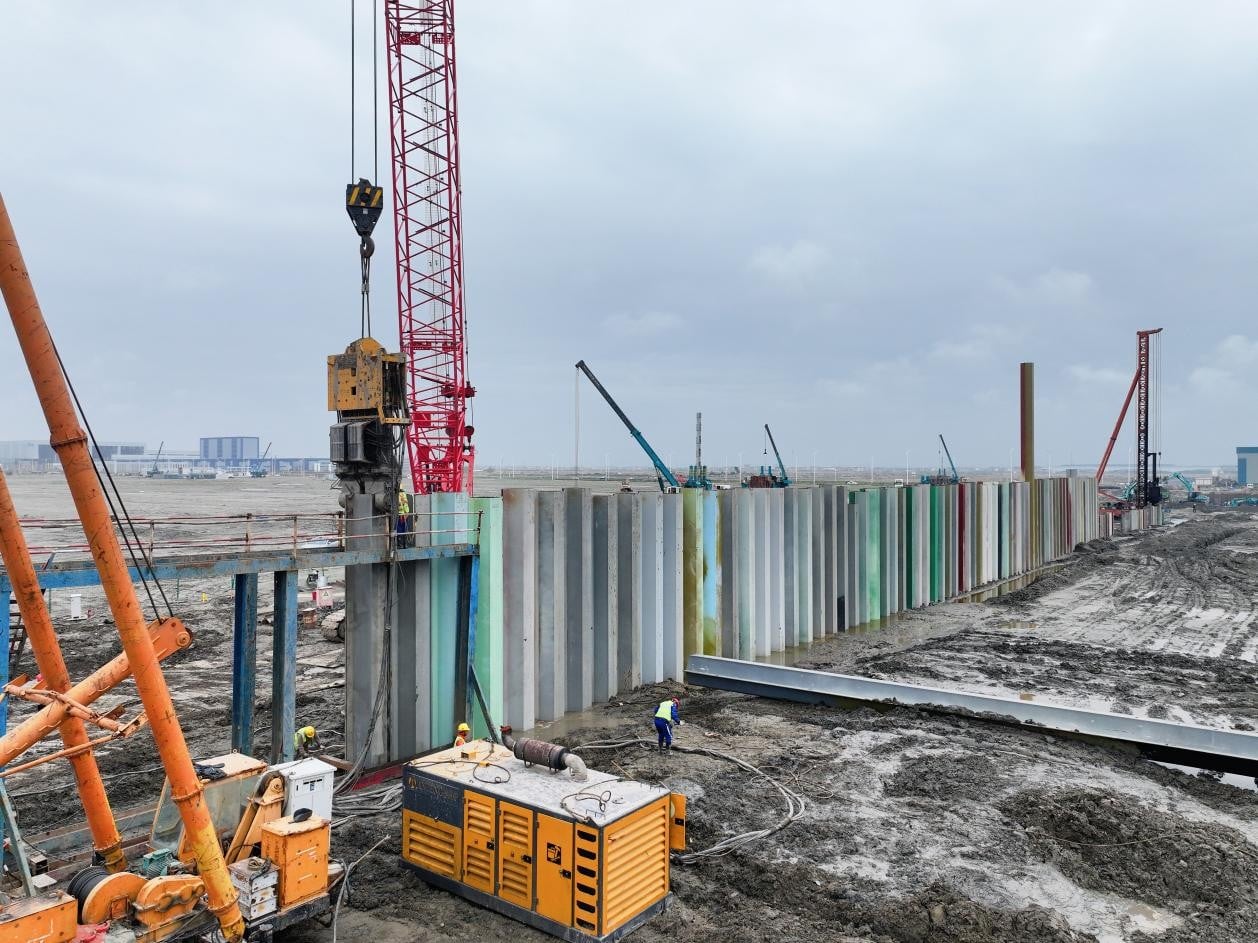
Therefore, the correct selection process should include providing pile dimensions, pile length, penetration depth, geotechnical report, construction water depth or site restrictions, crane model, construction goals and environmental requirements, followed by comprehensive assessment by the manufacturer. For contractors, the right vibratory hammer is not the biggest one, but the equipment that can complete pile sinking stably, efficiently and economically under current conditions. Jiangsu Anteng Machinery Co., Ltd. can provide integrated selection solutions covering hydraulic vibratory hammers, resonance-free vibratory hammers, power packs and customized clamps for steel sheet piles, steel pipe piles, cofferdams, ports, bridges, photovoltaic projects and overseas works.