
 EN

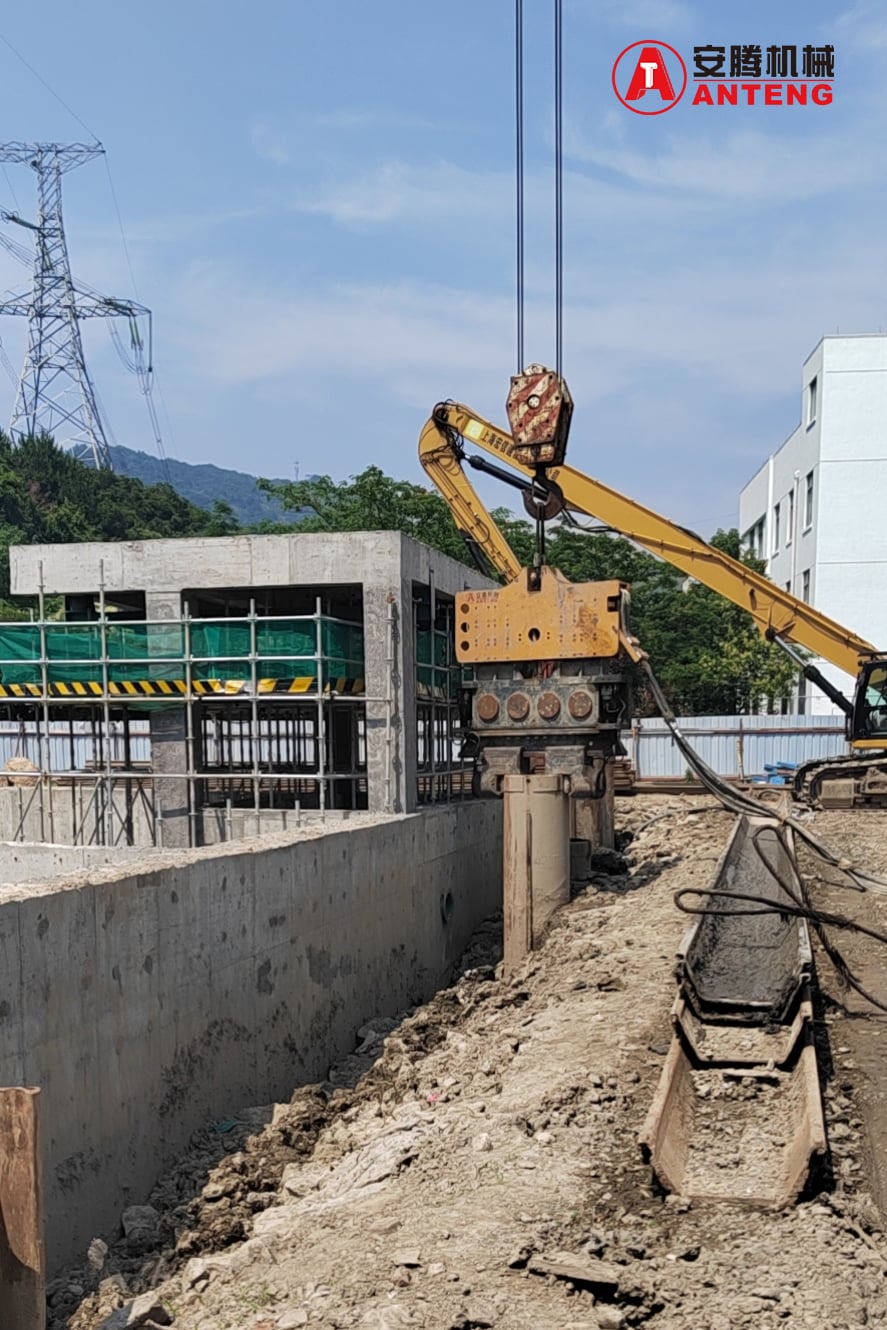
The selection and application of a pile hammer depends fundamentally on the driving technology employed in foundation construction. Different pile hammer designs are optimized for distinct driving methodologies, each offering unique advantages in terms of speed, noise reduction, soil compatibility, and project economics. Understanding how a pile hammer differs across driving technologies is essential for contractors, engineers, and project managers who need to match equipment capabilities with site conditions and performance requirements.
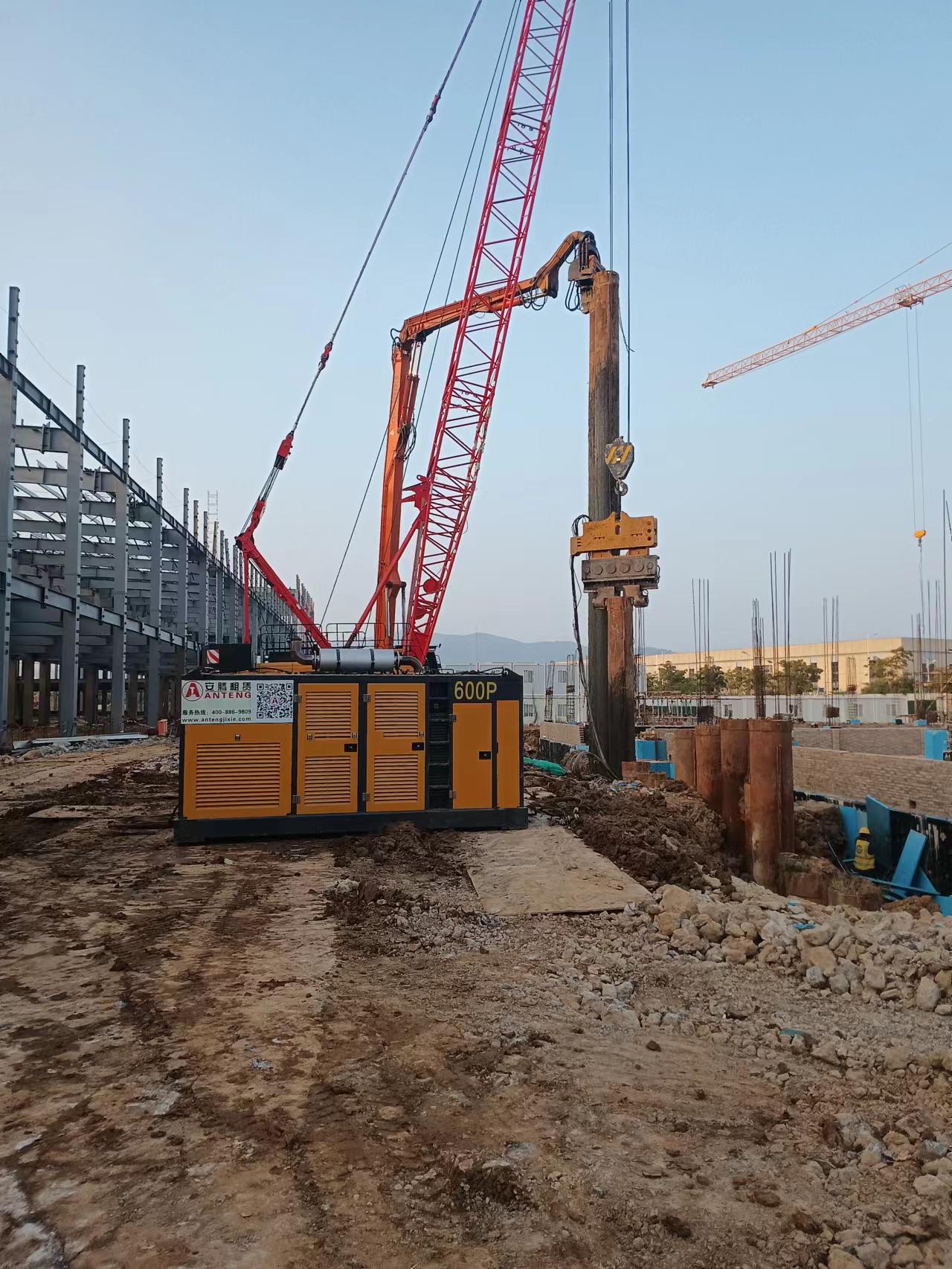
Every pile hammer operates within a framework defined by its driving technology. The driving technology determines how force is applied to the pile, how energy is transferred into the ground, and ultimately how efficiently the pile reaches its design depth. These technological distinctions create substantial differences in pile hammer construction, performance characteristics, and operational requirements across the construction industry.
Vibratory Pile Hammer Technology
Operating Mechanism and Design
A vibratory pile hammer uses oscillating motion rather than impact blows to drive piles into the ground. This pile hammer technology employs eccentric weights rotating at high frequency, typically between 1200 and 2500 RPM, to generate vertical vibrations that reduce soil resistance. The pile hammer itself must be engineered with robust bearing systems and precision balance to withstand continuous vibration without mechanical failure. The design of a pile hammer in vibratory systems emphasizes durability and consistent frequency control, allowing operators to adjust vibration amplitude and frequency based on soil conditions and pile type.
The structural integrity of a vibratory pile hammer is critical because it experiences rapid, repetitive motion rather than singular impact events. This pile hammer design includes sophisticated damping systems, reinforced mounting brackets, and specialized lubrication to extend service life. Unlike impact-based driving, a vibratory pile hammer can maintain continuous operation for extended periods, making it ideal for large-scale foundation projects requiring dozens of piles driven to uniform depths.
Soil Interaction and Performance Benefits
When a pile hammer operates with vibratory technology, the oscillating motion temporarily reduces effective soil friction, allowing the pile to penetrate more easily. A vibratory pile hammer produces significantly lower noise and vibration transmission to surrounding structures compared to impact methods, making it preferred in urban environments and near sensitive infrastructure. This pile hammer technology also generates less ground shock, reducing the risk of damage to nearby buildings, utilities, and archaeological features. The continuous motion characteristic of a vibratory pile hammer enables faster driving speeds in suitable soil conditions, improving project timelines and reducing operational costs.
Impact Pile Hammer Technology
Traditional Diesel and Air Hammers
An impact pile hammer operates by delivering successive forceful blows to transfer energy directly into the pile, driving it downward through sheer force. This pile hammer design uses either diesel combustion or compressed air to generate the necessary striking power. A traditional diesel pile hammer ignites fuel within a cylinder to propel a striking block downward at controlled intervals, while a pneumatic pile hammer relies on compressed air for the same purpose. The mechanical simplicity of an impact pile hammer design makes it widely deployed globally, though modern variations now include electronic controls for more consistent energy delivery.
The pile hammer in impact systems must be engineered to withstand tremendous stress at the moment of impact. Each blow generates shock waves that propagate through the pile and into the surrounding soil. A pile hammer used in impact driving requires stronger steel composition, more sophisticated cushioning systems, and precise alignment to prevent lateral displacement or pile damage. The repetitive impact nature of this pile hammer technology means structural components experience cumulative fatigue, necessitating regular inspection and maintenance schedules.
Noise, Vibration, and Soil Considerations
Impact driving technology produces the highest noise levels among all pile hammer methods, often exceeding 110 decibels at the source. A pile hammer operating with impact technology creates substantial ground vibration that can propagate considerable distances, affecting surrounding properties and sensitive equipment. However, this pile hammer approach works effectively in hard, dense soils where vibratory methods may prove inefficient. The discrete impact nature of this pile hammer technology allows operators to monitor individual driving events, making it easier to detect pile refusal or obstructions during installation.
Hydraulic and Modern Driving Technologies
Hydraulic Pile Hammer Systems
Modern hydraulic pile hammer systems represent an evolution combining the best aspects of both vibratory and impact methodologies. This pile hammer technology uses hydraulic fluid pressure to generate controlled striking motion through servo-controlled cylinders and accumulator systems. A hydraulic pile hammer offers precise energy adjustment, allowing operators to optimize driving force for specific soil types and pile geometries in real time. The electronic control systems governing a modern pile hammer provide data logging capabilities, enabling contractors to document driving records for quality assurance and regulatory compliance.
The pile hammer design in hydraulic systems integrates with the excavator or carrier equipment through standardized coupling systems. This integration makes a pile hammer attachment versatile across different equipment platforms, reducing capital investment requirements for contractors managing multiple project types. A hydraulic pile hammer typically generates moderate noise levels, making it suitable for environmentally sensitive locations while maintaining competitive driving speeds in most soil conditions. The smooth acceleration and deceleration characteristics of this pile hammer technology reduce shock loads on both equipment and the driven pile itself.
Vibratory-Impact Hybrid Systems
Advanced hybrid pile hammer technologies combine vibratory motion with periodic impact strikes, optimizing performance across diverse soil profiles. This pile hammer approach begins with vibratory motion to reduce friction, then applies controlled impacts to break through dense layers or achieve final depth requirements. A hybrid pile hammer system can transition between operating modes, allowing a single piece of equipment to handle challenging site conditions that would require equipment swaps using traditional methods. This technological flexibility makes a modern pile hammer investment particularly valuable for contractors executing mixed-soil foundation projects or working in regions with variable geological conditions.
Comparative Factors in Pile Hammer Selection
Energy Transfer Efficiency
The efficiency of energy transfer from the pile hammer to the soil varies dramatically across driving technologies. A vibratory pile hammer transfers energy through continuous, distributed oscillations that gradually overcome soil resistance, making it highly efficient in sandy, silty soils but less effective in stiff clays. An impact pile hammer concentrates energy in discrete blows, making it particularly effective at breaking through hard layers and detecting obstructions, though substantial energy losses occur through ground shock. The pile hammer technology selection must align with specific soil profiles to maximize efficiency and minimize operating costs.
Equipment and Operational Costs
Initial capital investment varies significantly depending on pile hammer technology chosen. A simple diesel impact pile hammer represents the lowest initial cost but requires ongoing fuel consumption and maintenance labor. A vibratory pile hammer demands higher upfront investment but often justifies itself through faster production rates and reduced environmental compliance costs. A modern hydraulic pile hammer requires integration with compatible excavator platforms but provides superior control and operational flexibility. Total cost analysis for a pile hammer selection must account for rental rates, fuel efficiency, labor requirements, environmental permits, and project duration to determine genuine economic advantage.
FAQ
What soil conditions favor vibratory pile hammer technology over impact methods?
Vibratory pile hammer systems excel in cohesionless soils including sand, silt, and gravel where reduced friction significantly improves penetration speed. A vibratory pile hammer works least effectively in stiff clays and soils containing boulders or dense debris. For projects where environmental noise and ground vibration must be minimized regardless of soil type, a vibratory pile hammer remains preferable despite potentially slower driving speeds. Contractors typically conduct soil investigation and test driving before committing to a specific pile hammer technology.
How do modern hydraulic pile hammer systems improve upon traditional designs?
A hydraulic pile hammer provides electronic controls enabling real-time energy adjustment based on soil feedback and pile penetration data. This modern pile hammer technology integrates data logging systems that create permanent records of driving performance, satisfying quality assurance requirements and enabling optimized driving procedures for future similar projects. The precision of a hydraulic pile hammer reduces structural stress on the driven pile, extending pile life and reducing installation-related damage. Most importantly, a modern pile hammer offers versatility, as the same attachment can operate on different carrier equipment without redesign or significant modification.
Can a single pile hammer switch between driving technologies during a project?
Hybrid pile hammer systems can indeed transition between vibratory and impact modes, making them adaptable to changing soil conditions within a single project. A standard impact pile hammer cannot transform into a vibratory system without complete replacement. Similarly, a dedicated vibratory pile hammer lacks impact capability. For projects encountering mixed soil layers, contractors often relocate equipment between locations, switching from a vibratory pile hammer for soft soils to an pile hammer with impact capability for harder strata, or invest in hybrid systems for seamless adaptability.